

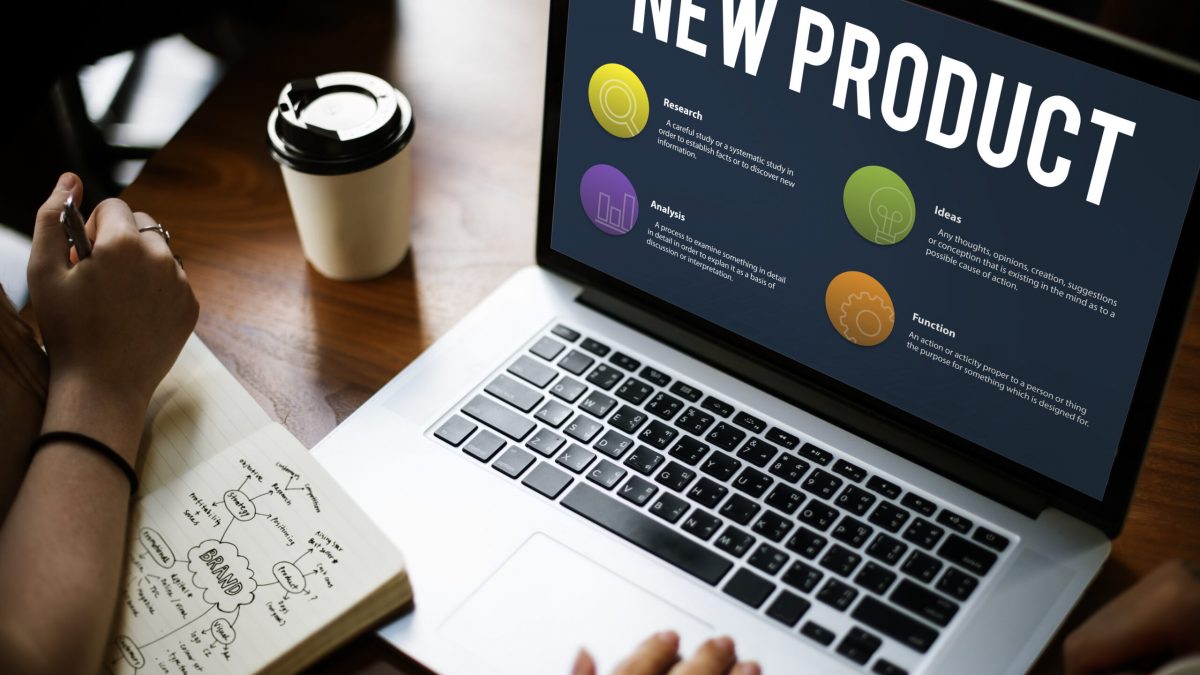
Launching a new product is an exhilarating journey, but it is also fraught with risk. The most common reason startups fail is not a lack of effort or capital, but rather the creation of something that the market does not actually need. Before you invest significant time, money, and emotional energy into building your vision, you must subject your idea to a rigorous validation process. Validation is the act of gathering evidence that your target audience has a genuine problem and that they are willing to pay for your specific solution. It is the bridge between a theoretical concept and a viable business model.
Define Your Core Assumptions
Every business idea is built upon a foundation of assumptions. Most founders assume that they know who their customer is, what the customer struggles with, and why their proposed solution is superior to existing alternatives. To validate effectively, you must first articulate these assumptions clearly. Write them down in a document or a simple spreadsheet.
Focus on identifying the riskiest assumptions. If your product idea relies on the belief that a specific demographic has a budget for your tool, test that hypothesis first. If your model depends on a particular technological breakthrough, assess the feasibility of that hurdle before moving forward. By isolating your assumptions, you can prioritize which ones need empirical evidence rather than guessing.
Conduct Qualitative Customer Interviews
There is no substitute for speaking directly with potential users. Data and surveys are useful, but they often lack the depth required to understand the nuances of a customer pain point. When conducting interviews, avoid asking friends and family for feedback, as they are often biased and inclined to offer polite, unhelpful encouragement.
Instead, find individuals who fit your target user persona. Your objective is not to pitch your product but to learn about their reality. Ask open-ended questions such as:
-
Can you describe the last time you dealt with this specific problem?
-
What solutions have you tried in the past to resolve this issue?
-
What is the most frustrating part of that process for you?
-
How much time or money do you currently lose because this problem remains unsolved?
Listen more than you speak. If you find yourself explaining the features of your product for most of the conversation, you are likely leading the witness and biasing the results. The goal is to uncover whether the problem is painful enough to demand a new solution.
Utilize The Smoke Test Method
A smoke test—also known as a concierge or landing page test—is a powerful way to measure market interest without building the product. Create a simple, professional one-page website that describes the value proposition of your product as if it were already available.
Include a call to action, such as a waitlist signup form or an email capture for early access. By driving targeted traffic to this page using low-cost social media or search ads, you can see if people are actually interested in what you have to offer. If your conversion rate is high, you have strong evidence that your messaging resonates and that there is a market hunger for the solution. If the conversion rate is low, do not be discouraged. Use the results to pivot your messaging, target a different audience segment, or refine the value proposition. This is much cheaper than developing a product that no one wants.
Build a Minimum Viable Product
Once you have gathered qualitative insights and positive signals from smoke tests, it is time to build a Minimum Viable Product. A common mistake is to interpret a minimum viable product as a feature-light version of a grand vision. In reality, it should be the smallest, simplest tool that solves the core problem for the user.
If you are planning to build a complex software platform, consider starting with a manual process, a simple spreadsheet, or a no-code tool. If you are building a physical product, use prototypes or 3D-printed models to get something into the hands of real users. The goal of the prototype is to observe behavior. Watch how your test users interact with the solution. Do they intuitively understand how it works? Do they actually use it to solve their problem, or do they stop after the first attempt? Real-world usage data provides the final, undeniable proof that your idea has legs.
Analyze Competitive Alternatives
Never fall into the trap of believing you have no competition. If there is no competition, there is often no market. If someone else is already solving the problem, analyze how they are doing it. Are their customers satisfied? Are there specific gaps in their offering that you can exploit?
Look at reviews on platforms like app stores, industry forums, and social media. Search for phrases like “is there a better alternative to” or “I hate it when.” These comments represent the exact opportunities you need. Validating your idea involves confirming that your product offers a distinct advantage—be it better design, lower cost, faster service, or superior performance—that makes it worth switching to from the current status quo.
Analyze Pricing Sensitivity
One of the most common pitfalls in validation is failing to test for price. You might find people who say they like your idea, but liking an idea is very different from opening a wallet. To truly validate, you must test whether people are willing to pay.
You can simulate a transaction during your validation phase. If you are doing a landing page test, include a pre-order button or a request for a deposit. Even if you do not collect the money, the act of a user clicking through a payment prompt is a much stronger indicator of intent than a simple email signup. If potential customers are hesitant to commit to a price, you need to either justify the value of your product more effectively or refine your cost structure to make it more accessible.
Iterate Based on Feedback
Validation is rarely a one-and-done event. It is a continuous cycle of learning, building, and refining. You will almost certainly discover that your initial idea needs modification. Perhaps you find that your target audience does not value a specific feature you thought was critical, or that they are actually using your prototype in a way you never intended.
Embrace these insights. The most successful founders are those who are willing to detach from their initial ego-driven vision and pivot toward the reality of what the market dictates. Every piece of negative feedback is a gift, as it saves you from spending months on features that add no value. By remaining flexible and data-driven, you increase your chances of launching a product that fits perfectly into the market landscape.
Conclusion
Validating your product idea is an investment in your success. It forces you to move beyond assumptions and engage with the harsh reality of the marketplace. By conducting interviews, running smoke tests, and building low-fidelity prototypes, you significantly reduce the risk of failure. Remember that the goal is not to prove that your idea is good; the goal is to discover the truth about whether your idea can become a successful business. When you finally move to the launch phase, you will do so with the confidence that comes from knowing you have solved a real problem for real people.
FAQ
What should I do if my validation efforts yield entirely negative results?
If your feedback is consistently negative, it is a clear sign that you should pivot or abandon the idea. While this feels like a setback, it is actually a massive victory because it prevents you from wasting time and capital on an unsuccessful venture. Use what you learned to move to your next idea faster.
How many interviews are enough to call a product idea validated?
There is no magic number, but most successful founders find that after 15 to 20 high-quality interviews, the feedback begins to repeat itself. When you stop hearing new objections or new insights, you have likely gathered enough information to make an informed decision.
Is it possible to over-validate an idea?
Yes. Some founders fall into a state of paralysis, constantly seeking more data while delaying the build. Validation should be focused and time-boxed. Once you have a clear pattern of evidence that supports your hypothesis, stop researching and start building.
How do I validate an idea that is highly confidential or involves intellectual property?
You can still validate without revealing your trade secrets. Focus your questions on the problem and the customer experience rather than your specific technical solution. You can describe what the tool does for the user without explaining how the technology works under the hood.
Can I use automated ads to validate if I have zero budget?
If you have no budget for ads, you must use organic channels to reach your target audience. Post in niche communities, participate in relevant social media discussions, or reach out to potential users through professional networking sites. It will take more time, but the quality of feedback from these sources is often higher.
What is the biggest mistake people make during the validation phase?
The biggest mistake is leading the conversation. Founders often subconsciously try to sell their idea rather than testing it. You must stay neutral and objective. If you treat your idea like a hypothesis to be disproven rather than a treasure to be protected, you will get much more honest feedback.